

In this guide
hip pain in women
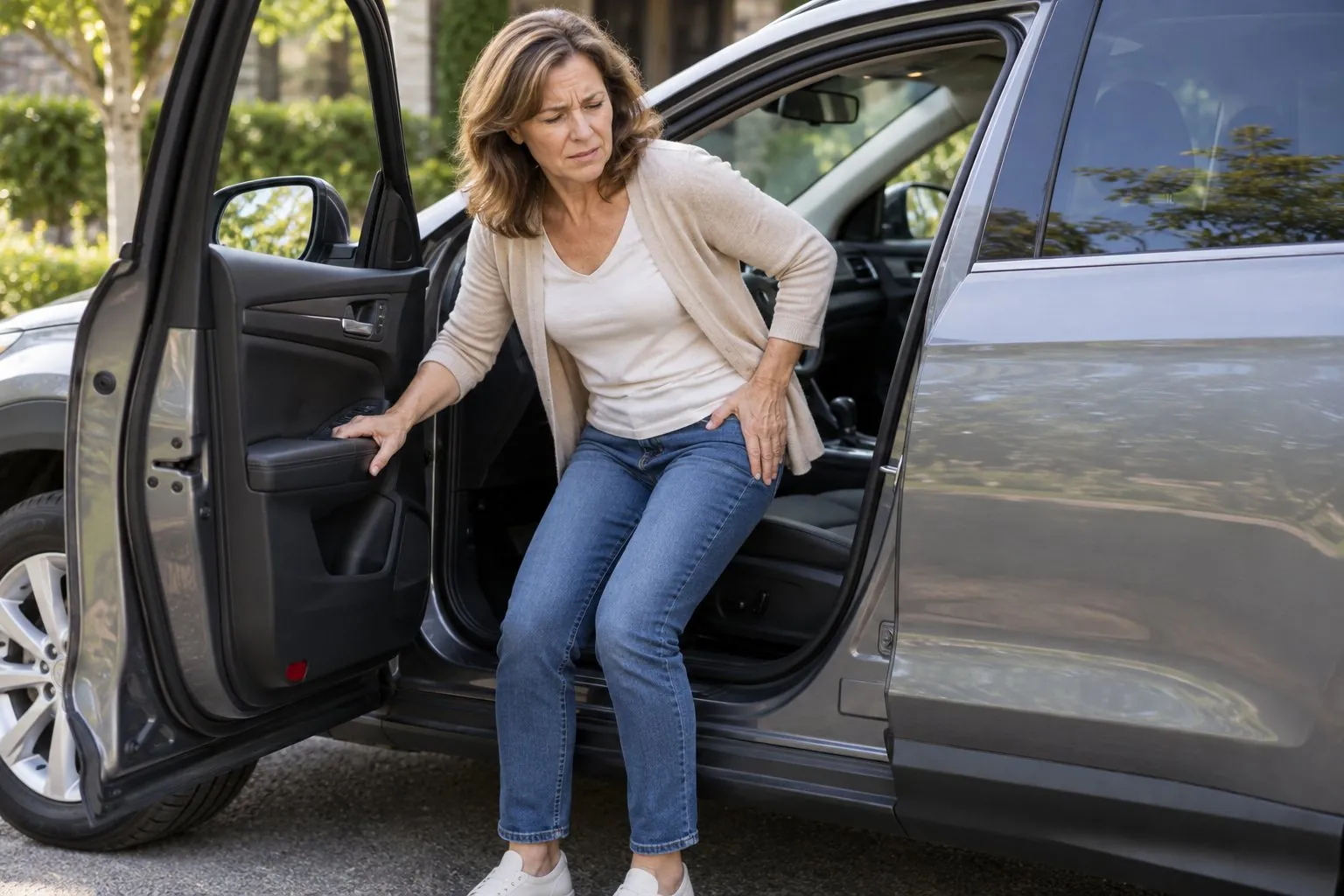
Hip pain in women is most often caused by gluteal tendinopathy, the tendon problem usually called hip bursitis, which peaks between ages 40 and 60. Falling estrogen around menopause may add to tendon and joint aches. Adult hip dysplasia, arthritis and pelvic or gynecologic conditions can also cause hip pain and are worth ruling out.
Why do so many women get hip pain in midlife?
The most common cause is pain on the outside of the hip known as greater trochanteric pain syndrome. A review in the British Journal of General Practice reports that it is seen more often in women between 40 and 60 and accounts for 10 to 20 percent of people who see their primary care doctor for hip pain.
A wider pelvis changes the angle at which the gluteal tendons wrap over the bony point of the hip. Add years of sitting with legs crossed, weight changes, and the hormone shifts of menopause, and those tendons can become irritated and slow to recover.
Is it really bursitis?
For years, pain on the side of the hip was called trochanteric bursitis. Imaging and surgical studies have since shown that most of it comes from the gluteus medius and minimus tendons, a condition called gluteal tendinopathy, sometimes with an irritated bursa alongside. Cleveland Clinic notes it is a common cause of hip pain, especially in older women.
The name matters because the treatment differs. Tendons respond to the right kind of loading and strengthening, while rest alone tends to do little. Typical signs include:
Diagnosis is mostly hands-on. Pressing on the bony point of the hip is often very tender, and standing on the sore leg for up to 30 seconds commonly brings on the pain. X-rays are usually normal with this condition but help rule out arthritis and fractures. MRI can show tendon changes, though similar changes also appear in people without pain, so the scan has to match the exam.
- Pain at the point of the hip that may spread down the outside of the thigh toward the knee.
- Pain when lying on that side at night, or on the other side with the top knee dropping across.
- Pain climbing stairs, walking uphill or standing on one leg to pull on pants.
- Stiffness and pain when getting up after sitting, especially from low chairs.
Can menopause cause hip pain?
There is no single hip disease caused by menopause. Even so, the change in hormones can affect how joints and tendons feel. A 2026 article in the journal Menopause notes that about 70 percent of women report musculoskeletal symptoms during menopause and that estrogen receptors are found in joint linings, muscles and tendons. Lower estrogen may therefore affect how these tissues handle load and recover.
That same article points out there are no large trials testing hormone therapy specifically for menopausal joint pain, and the benefit seen in broader studies was modest. Decisions about hormone therapy belong with your primary care doctor or gynecologist. What our team can do is find the specific structure that hurts and treat it directly.
Could it be hip dysplasia found in adulthood?
Hip dysplasia means the socket is too shallow to cover the ball fully. It is more common in girls and can go unnoticed through childhood, only to cause symptoms in the teen or young adult years, and sometimes later. Mayo Clinic describes activity-related groin pain and a sense that the hip is unstable as typical signs in teens and young adults.
Because the ball is not well covered, extra stress lands on the rim of the socket. Over time that can tear the labrum and make the hip more likely to develop osteoarthritis. A standing pelvic X-ray shows the shape of the socket. For younger adults with dysplasia and little arthritis, a hip-preserving operation called periacetabular osteotomy may be discussed.
Signs that point toward dysplasia include groin pain that started in your 20s or 30s without an injury, a hip that feels like it might slip or give way, and a family history of hip problems. These deserve a look by a hip specialist, who will measure how well the socket covers the ball on your X-ray.
What else could be causing a woman's hip pain?
Hip osteoarthritis is common in women and usually hurts in the groin, with stiffness putting on shoes and socks. Lower back problems can send pain into the buttock and hip. Stress fractures of the femoral neck are seen more often in women who run or do other endurance sports.
Some pain that feels like it is in the hip actually starts in the pelvis. Gynecologic, bladder and bowel conditions can refer pain to the groin and hip, and the review on lateral hip pain notes that pelvic problems can be mistaken for it. If your hip pain comes with fever, abnormal bleeding, pelvic pressure, or pain tied to your cycle or to urination, see your primary doctor or gynecologist as well.
What helps hip pain in women?
For tendon pain on the outside of the hip, the strongest evidence supports education and a progressive strengthening program. Cleveland Clinic reports that 7 out of 10 people with gluteal tendinopathy improve significantly after eight weeks of physical therapy exercises. Simple daily changes help as well.
- Avoid crossing your legs and standing with your weight shifted onto one hip.
- Sleep with a pillow between your knees, and avoid lying directly on the sore side.
- Choose higher chairs and limit long stair climbs while symptoms settle.
- Build up walking gradually on flatter ground before returning to hills.
- A cortisone injection can calm pain for a while and is most useful as a window to start strengthening.
When should a woman see a hip specialist?
Make an appointment if hip pain has lasted more than a few weeks, keeps you up at night, makes you limp, or keeps coming back despite rest and over-the-counter medicine. Go to the emergency room for hip pain after a fall with inability to bear weight, or for hip or pelvic pain with high fever.
Dr. Stride checks the hip, the tendons around it and the lower back at every first visit, and arranges imaging only when it will change the plan. The Saturday Hip Pain Clinic is a convenient way to get answers without missing work, and you can bring any prior X-rays or MRI.
Questions patients ask
Why does my hip hurt more since menopause?
Lower estrogen may affect how tendons, muscles and joints handle load, and many women notice more aches during this time. The hip pain itself is often gluteal tendinopathy or arthritis, which respond to specific treatment. An exam finds which one is involved.
Will hormone therapy fix my hip pain?
It is not a proven treatment for hip pain. Studies show only modest improvement in joint symptoms, and the decision depends on your overall health, so discuss it with your primary doctor or gynecologist. Targeted strengthening helps most tendon-related hip pain.
Is hip bursitis common in women?
Yes. Outside-of-hip pain usually labeled bursitis is more common in women and in middle-aged and older adults. Most of it involves the gluteal tendons, so a strengthening program is usually the core of treatment.
SourcesReferences5
Medically reviewed by Dr. Stride, MD. How we write and review content. This guide is educational and does not replace an exam.
- Greater trochanteric pain syndrome: a review of diagnosis and management in general practice (opens in a new tab) British Journal of General Practice (PMC)
- Gluteal Tendinopathy: Symptoms, Causes & Treatment (opens in a new tab) Cleveland Clinic
- Joint pain and menopause (opens in a new tab) Menopause (PMC)
- Hip dysplasia - Symptoms and causes (opens in a new tab) Mayo Clinic
- Hip Bursitis (opens in a new tab) AAOS OrthoInfo