In this guide
- The short answer
- What causes hip pain when you lie on your side?
- Who is most likely to get outer hip pain at night?
- How is this different from hip arthritis pain?
- What helps side-lying hip pain?
- Do cortisone shots or surgery help?
- When is night hip pain a warning sign?
- How can our team help you sleep through the night again?
- Questions
- References
Why does my hip hurt when I lay on my side?
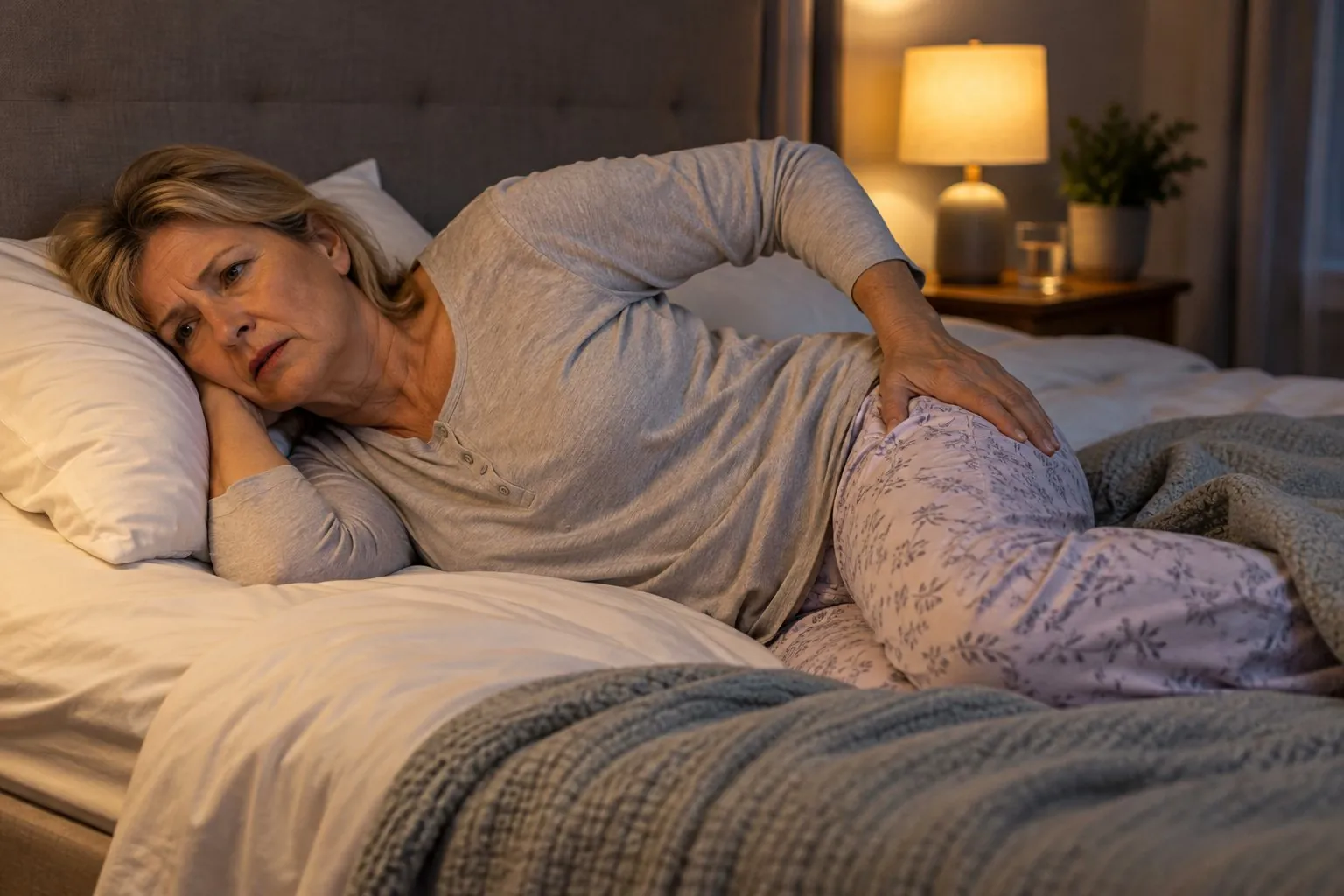
Hip pain when you lie on your side is most often caused by greater trochanteric pain syndrome, an irritation of the gluteal tendons and the bursa on the outer hip. Lying on that side presses on the sore tissue. It is most common in women in their 40s to 60s and often improves with targeted exercise.
What causes hip pain when you lie on your side?
The usual culprit has a long name: greater trochanteric pain syndrome, or GTPS. The greater trochanter is the bony point you can feel on the outside of your upper thigh. Several gluteal tendons attach there, and a fluid-filled sac called the trochanteric bursa cushions them.
A peer-reviewed review in PubMed Central describes GTPS as pain and tenderness over the outer hip that covers a range of problems, including gluteal tendon irritation and bursitis. For years this was simply called "hip bursitis," but we now know the tendons are often the main source of the pain.
When you lie on that side, your body weight presses the sore tendons and bursa against the bone. Lying on the other side can hurt too, because the top leg drops across your body and stretches the same tendons.
Who is most likely to get outer hip pain at night?
GTPS is common. The same review reports that it affects women two to three times more often than men and is seen most often in people in their 40s to 60s. Cleveland Clinic notes that women over 40, especially after menopause, are more prone to gluteal tendinopathy, and that it also affects younger runners, skiers and dancers.
Tendons respond to load. Cleveland Clinic explains that gluteal tendinopathy can come from too much load, such as a sudden increase in activity, and also from too little, such as a mostly sitting lifestyle. Extra body weight and a wide pelvis add pressure on the tendons. AAOS OrthoInfo lists other risk factors for hip bursitis, which include:
- A recent jump in walking, running or stair climbing
- Long periods of standing, or sitting with legs crossed
- Weak hip muscles or a tight iliotibial (IT) band
- Lower back problems or a leg-length difference that changes how you walk
- A fall or direct blow to the side of the hip
“Outer hip pain at night is one of the most common things we see, and most people get their sleep back with the right exercises.”
How is this different from hip arthritis pain?
Location is the biggest difference. GTPS pain sits on the outside of the hip and may spread down the side of the thigh toward the knee. The spot over the bony point is usually tender to press. AAOS OrthoInfo notes that this pain is typically worse at night, when lying on the affected hip and when getting up from a chair after sitting.
Arthritis inside the hip joint behaves differently. AAOS OrthoInfo describes hip osteoarthritis pain as felt mostly in the groin or thigh, with stiffness that makes it hard to put on shoes or socks. Arthritis pain at night tends to be a deep ache whatever position you choose, while GTPS pain usually eases when you move off the sore side. Some people have both, which is why a careful exam matters.
Pain from the lower back can also land on the outside of the hip. Cleveland Clinic notes that gluteal tendinopathy and low back pain often appear together, so Dr. Stride checks the spine at every visit. Numbness, tingling or pain that travels below the knee suggests a nerve may be involved.
What helps side-lying hip pain?
Most people improve without surgery. The PubMed Central review concludes that physical therapy and a home exercise program are the first-line treatment for GTPS and offer the longest-lasting benefit, even though improvement may not be immediate. Cleveland Clinic reports that 7 out of 10 people with gluteal tendinopathy see significant improvement with eight weeks of physical therapy exercises.
Small daily changes reduce the pressure on the tendons while they recover. Cleveland Clinic suggests these steps:
- Sleep with a pillow between your knees
- Avoid crossing your legs and sitting in low chairs
- Limit stair climbing for a while and walk on flatter ground when you can
- Try heat on the sore area
- Avoid standing with your weight hanging on one hip
Do cortisone shots or surgery help?
A cortisone injection into the area can calm severe pain enough to let you sleep and start exercising. AAOS OrthoInfo notes that relief may be temporary and that the number of injections should be limited. The PubMed Central review found that injections tend to give short-term relief and work better when combined with physical therapy.
Surgery is rarely needed for bursitis alone. When imaging shows a true tear of the gluteus medius tendon and months of good non-surgical care have not helped, a tendon repair may be discussed. Dr. Stride reviews these options only after the simpler steps have had a fair trial.
When is night hip pain a warning sign?
Pain that only shows up when you lie on the sore side is rarely dangerous. Pain that wakes you no matter how you lie, keeps getting worse week by week or comes with fever, chills or unexplained weight loss is different and deserves a prompt evaluation. So does a hip that is hot, red and swollen, which needs same-day care.
Cleveland Clinic also advises calling a provider if hip pain interferes with daily activities or sleep, if you cannot climb a flight of stairs without pain, or if you have both lower back and hip pain.
How can our team help you sleep through the night again?
At Dr. Stride Hip & Joint, the visit starts with a hands-on exam to confirm where the pain comes from, along with a check of your lower back. X-rays help rule out arthritis, and an ultrasound or MRI is added when a tendon tear is suspected. From there, our team builds a plan around physical therapy and practical changes at home.
If outer hip pain has been costing you sleep, the Saturday Hip Pain Clinic in Memorial City is a good place to start. New patients are usually seen within the week, and you are welcome to bring any X-rays or MRI you already have so our team can review them with you.
Questions patients ask
What is a good way to sleep with outer hip pain?
Most people do well lying on the pain-free side with a pillow between the knees. That keeps the top leg from dropping across the body and stretching the sore tendons. Lying on your back with a pillow under the knees is another option.
Is hip bursitis the same as gluteal tendinopathy?
They are closely related. Bursitis is inflammation of the cushioning sac, while tendinopathy is wear in the tendons themselves, and both fall under greater trochanteric pain syndrome. Treatment overlaps a great deal.
How long does outer hip pain take to get better?
Many people notice improvement after about eight weeks of consistent physical therapy exercises. Cleveland Clinic notes that without treatment, relief can take up to a year. Starting the right exercises early usually shortens that timeline.
SourcesReferences4
Medically reviewed by Dr. Stride, MD. How we write and review content. This guide is educational and does not replace an exam.
- Hip Bursitis (opens in a new tab) AAOS OrthoInfo
- Gluteal Tendinopathy: Symptoms, Causes & Treatment (opens in a new tab) Cleveland Clinic
- Management of Greater Trochanteric Pain Syndrome: A Narrative Review (opens in a new tab) PubMed Central (peer-reviewed review)
- Hip Osteoarthritis (opens in a new tab) AAOS OrthoInfo