In this guide
- The short answer
- Why does a hip problem hurt in the groin?
- Which hip conditions cause groin pain when walking?
- How do arthritis and impingement feel different?
- Could groin pain be a stress fracture or osteonecrosis?
- Could it be a hernia or a pulled muscle instead?
- When does groin pain need urgent care?
- How do we find the cause of groin pain?
- Questions
- References
groin pain when walking
Groin pain when walking very often comes from the hip joint itself. Hip arthritis, labral tears, hip impingement, stress fractures and loss of blood supply to the hip bone all tend to hurt in the groin. A hernia or strained inner thigh muscle can feel similar, so an exam and X-ray help sort it out.
Why does a hip problem hurt in the groin?
The hip joint sits deep in the body, right behind the crease where your thigh meets your pelvis. When the ball or socket is irritated, the pain is usually felt in the front of the hip and groin, sometimes spreading down the thigh toward the knee or into the buttock.
The American Academy of Orthopaedic Surgeons lists groin pain as the most common place people feel hip osteoarthritis. Hip impingement and labral tears follow the same pattern. Pain on the outside of the hip, by contrast, more often comes from tendons and bursae around the joint.
Which hip conditions cause groin pain when walking?
Several conditions inside the joint can make walking hurt in the groin. Your age, activity level and how the pain started all help narrow the list.
A few patterns help. Pain that is worst with the first steps after sitting and then loosens a little points toward arthritis. Pain that is sharp with pivoting or deep bending points toward impingement or the labrum. Pain that builds the farther you go, and lingers after you stop, raises concern for a bone stress injury, particularly if you recently increased your mileage.
- Hip osteoarthritis: a deep groin ache and stiffness that build slowly, often worse in the morning or after sitting, and sometimes with a limp.
- Hip impingement (FAI): extra bone on the ball or socket rubs during movement, causing groin pain with turning, twisting or squatting, mostly in active younger adults.
- Labral tear: sharp pain in certain positions, a deep ache, and sometimes clicking or catching.
- Stress fracture of the femoral neck: groin pain that builds with weight-bearing activity, often in distance runners.
- Osteonecrosis (avascular necrosis): loss of blood supply to the ball of the hip, causing a dull or throbbing ache in the groin or buttock.
How do arthritis and impingement feel different?
Hip arthritis usually shows up after age 50, though it can start earlier. The pain tends to creep up over months or years, and everyday tasks such as putting on shoes, rising from a chair or taking a short walk become harder. An X-ray often shows narrowing of the joint space and bone spurs.
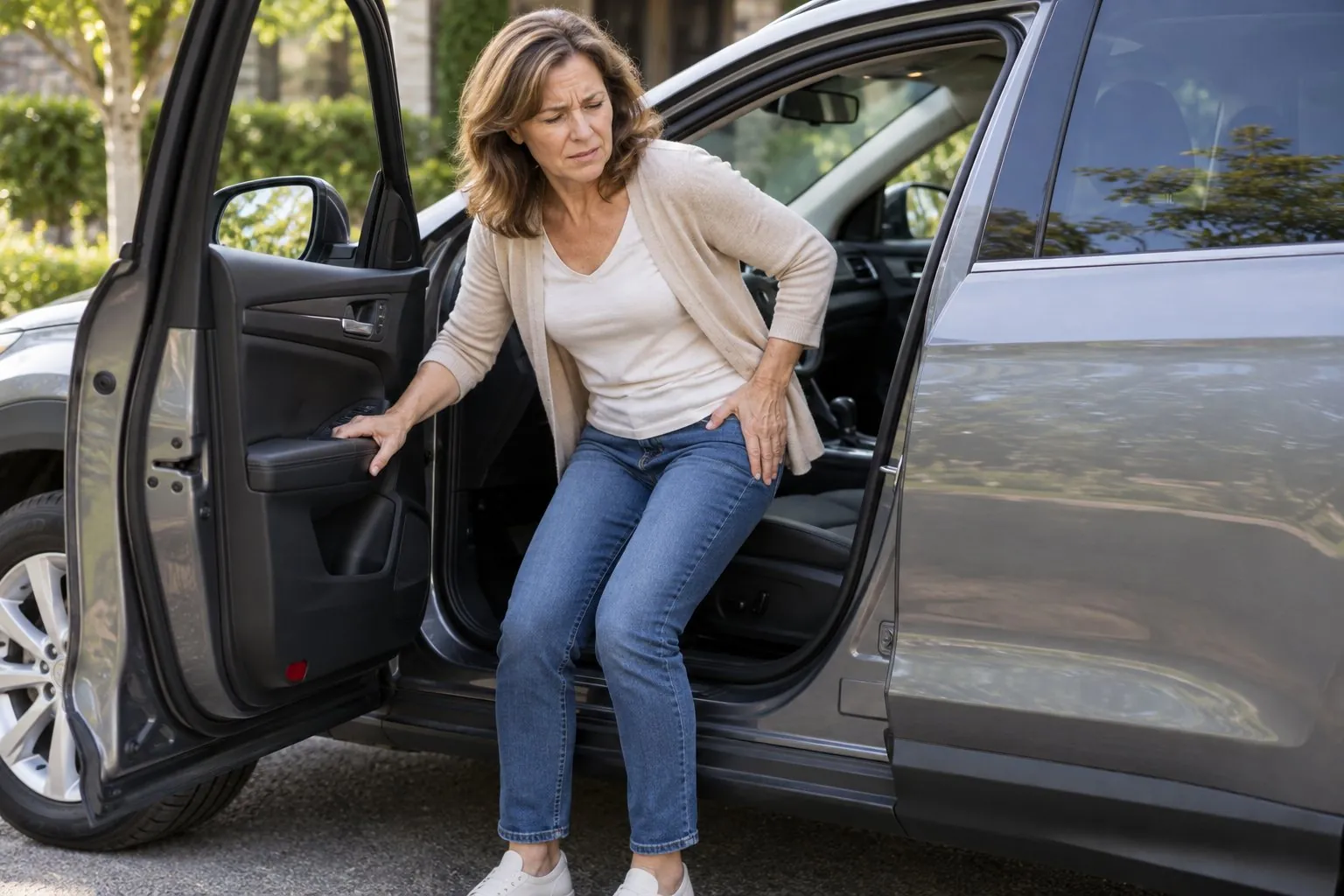
Impingement tends to affect active adults younger than that. The pain is often sharp with deep hip bending and rotation, such as squatting, pivoting or getting out of a low car, and can settle to a dull ache in between. X-rays show the extra bone, and an MRI shows any damage to the labrum or cartilage. Untreated impingement can wear on the joint over time, so steady symptoms are worth checking.
Could groin pain be a stress fracture or osteonecrosis?
These two are less common, and they are the ones not to miss. A femoral neck stress fracture is a crack in the narrow part of the thighbone just below the ball. A review in Acta Biomedica describes gradual groin pain that worsens with activity and weight bearing and eases with rest. It is seen most often in women runners and endurance athletes, and early fractures can be missed on X-ray, so MRI is the key test.
Osteonecrosis happens when the ball of the hip loses its blood supply. OrthoInfo notes it is more common between ages 40 and 65, and risk rises with heavy alcohol use, long-term steroid use and some medical conditions. Early diagnosis matters because some hip-preserving treatments only work before the bone collapses.
Could it be a hernia or a pulled muscle instead?
Not all groin pain comes from the hip. An inguinal hernia usually shows up as a bulge in the groin that may ache more when you stand, strain or lift, according to MedlinePlus. A strained adductor, the inner thigh muscle, usually follows a sudden push-off or stretch and hurts when you squeeze your knees together.
Hip joint pain is different. It tends to hurt when the hip is bent and rotated, and there is no visible bulge. Lower back problems can also send pain into the groin and thigh. During an exam our team checks the hip, the back and the abdomen so nothing is overlooked.
When does groin pain need urgent care?
Go to the emergency room if you cannot put weight on the leg after a fall, if the leg looks shortened or turned, or if groin pain comes with fever and chills. A hernia bulge that becomes painful, cannot be pushed back in or turns red or dark, especially with nausea or vomiting, is also an emergency.
Call for a prompt appointment if you are a runner whose groin pain keeps getting worse with each run or now hurts at rest or at night. That pattern can mean a stress fracture, and continuing to run on it risks a full break. Stop running and use a cane or crutches until you are seen.
How do we find the cause of groin pain?
Most diagnoses come from a careful history, a hip exam and standing X-rays. Your doctor will move the hip into positions that recreate the pain and watch how you walk. MRI is added for suspected labral tears, stress fractures or osteonecrosis, and a numbing injection into the joint can confirm whether the hip is the true source.
While you wait for that visit, it is reasonable to shorten walks, choose flat ground over hills and stairs, and avoid deep squats or low seats that pinch the front of the hip. Over-the-counter pain relievers may help if they are safe for you. If any of these steps make the pain clearly worse, or new symptoms appear, call sooner.
Treatment depends on the answer and often starts without surgery: activity changes, physical therapy and, when it fits, an injection. If walking has started to hurt in the groin, the Saturday Hip Pain Clinic is an easy way to get a clear diagnosis, and new patients are usually seen within the week.
Questions patients ask
Is groin pain when walking always from the hip?
No, but often. The hip joint is the most common source, and hernias, muscle strains and lower back problems can also cause it. An exam and X-ray usually sort it out quickly.
Can I keep walking or running with groin pain?
Gentle walking is often fine for mild arthritis pain. If pain worsens with each run, appears at rest or makes you limp, stop running and get checked, because a stress fracture is possible. Never push through pain after a fall.
Do I need an MRI for groin pain?
Not always. Standing X-rays answer many questions, including arthritis and impingement shape. MRI is added when a labral tear, stress fracture or osteonecrosis is suspected.
SourcesReferences5
Medically reviewed by Dr. Stride, MD. How we write and review content. This guide is educational and does not replace an exam.
- Hip Osteoarthritis (opens in a new tab) AAOS OrthoInfo
- Femoroacetabular Impingement (opens in a new tab) AAOS OrthoInfo
- Osteonecrosis of the Hip (opens in a new tab) AAOS OrthoInfo
- Management and treatment of femoral neck stress fractures in recreational runners: a report of four cases and review of the literature (opens in a new tab) Acta Biomedica (PMC)
- Hernia (opens in a new tab) MedlinePlus