In this guide
- The short answer
- Which hip pain symptoms need care today?
- Why do these red flags matter so much?
- Which hip pain should be checked within a week?
- What could be behind those warning signs?
- When can hip pain wait for home care?
- What does a hip specialist check at the first visit?
- When is the Saturday Hip Pain Clinic the right call?
- Questions
- References
How to tell if hip pain is serious?
Hip pain is serious if you cannot put weight on the leg, the leg looks shortened or turned out after a fall, the joint is hot and swollen with fever, or the pain is sudden and severe. Pain that lasts beyond a week or two of home care, causes a limp or catches and locks deserves a prompt exam.
Which hip pain symptoms need care today?
These are red flags. If any of them apply, go to an emergency room or call 911. Mayo Clinic and MedlinePlus both list similar signs that need immediate medical care after a hip injury.
If you fall and cannot get up, try not to walk it off. Stay as still as you can and call 911, or have someone call for you. Paramedics can move you safely and keep the leg supported on the way to the hospital, which matters if the hip is broken. Do not drive yourself with any of these symptoms.
- You cannot stand or put any weight on the leg
- The leg looks shorter than the other or is turned outward after a fall
- The hip looks deformed, or you cannot move the leg or hip
- Sudden, intense pain or sudden swelling
- A hot, swollen, red joint with fever or chills
- Hip or back pain with new numbness in the groin or inner thighs, leg weakness, or trouble controlling your bladder or bowels
Why do these red flags matter so much?
Each red flag points to a problem where time changes the outcome. AAOS OrthoInfo explains that with most hip fractures you cannot stand or bear weight, and the injured leg often looks shorter and rotated. Prompt surgery, ideally within 24 to 48 hours, may reduce the risk of complications such as blood clots and pneumonia.
A hot, swollen joint with fever can signal septic arthritis, an infection inside the joint. MedlinePlus notes that recovery is good with prompt antibiotics, while delayed treatment can cause permanent joint damage. Numbness in the groin and bladder changes can point to cauda equina syndrome, a compressed bundle of nerves in the low back. Cleveland Clinic calls it a reason to go to the emergency room immediately.
“Most hip pain can wait for a regular visit, and the few red flags that cannot should never wait until Monday.”
Which hip pain should be checked within a week?
These amber signs are less urgent. They still suggest something more than a simple strain. An appointment within a few days to a week is reasonable.
- Hip pain that has not improved after a week or two of rest and home care
- A limp, or trouble with stairs and walking
- Clicking or catching with locking, or a feeling the hip gives way
- Pain that wakes you at night and keeps getting worse
- Sudden hip pain if you take long-term steroids or have sickle cell disease
- Pain in both hips plus other joints, or hip pain with a rash or fever
What could be behind those warning signs?
MedlinePlus lists most of these as reasons to contact your provider, including pain that lasts after a week of home treatment and a new limp with trouble on stairs. They can point to problems such as a labral tear, femoroacetabular impingement, a stress fracture, arthritis or a tendon tear. Some of these get worse when ignored, especially a stress fracture, which can progress if you keep loading the bone.
Sudden hip pain in someone on long-term steroids raises concern for osteonecrosis, a loss of blood supply to the ball of the hip. Pain in several joints at once can point to an inflammatory arthritis. These are all conditions where an early diagnosis gives you more options.
When can hip pain wait for home care?
Mild aching after a new activity, a long hike or a weekend of yard work often settles with a few days of rest. Mayo Clinic notes that minor hip pain may not need a visit and suggests rest, ice wrapped in a towel, over-the-counter pain relievers and gentle stretching after a warm shower.
Give simple care about a week. If the pain is fading, ease back into activity. If it is the same or worse, or it keeps returning every time you go back to your usual routine, it is time for an exam.
MedlinePlus offers a few more home steps that ease many hip aches. Sleep on the side that does not hurt with a pillow between your legs, avoid standing for long periods, and wear flat, cushioned shoes. If you are overweight, gradual weight loss lowers the load on the hip over time.
Be cautious with "pushing through" pain. Bone stress injuries and tendon problems tend to get worse when you keep doing the activity that caused them, and a short break now often saves weeks later.
What does a hip specialist check at the first visit?
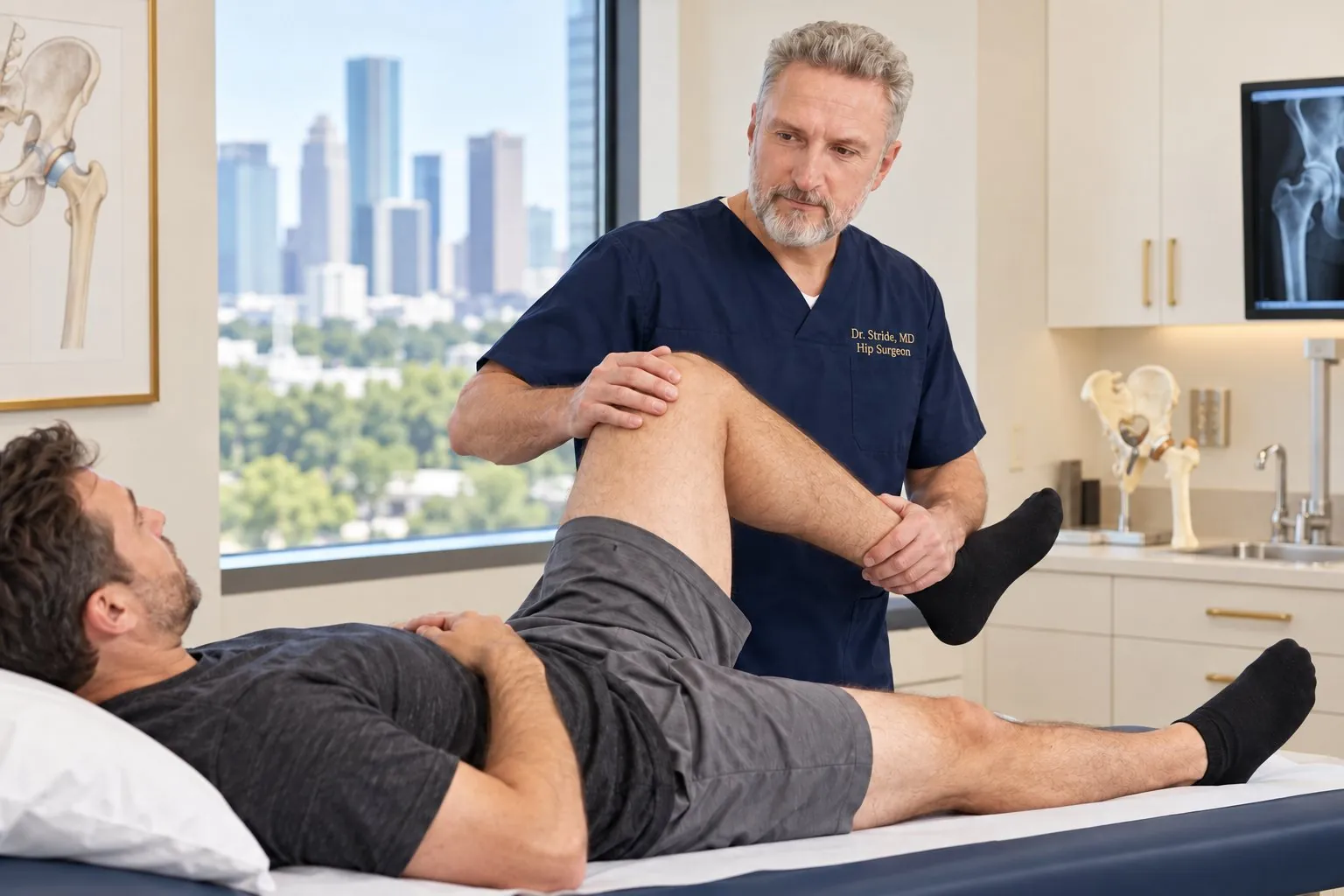
Dr. Stride starts with your story: where it hurts, how it started and what makes it better or worse. The exam checks your range of motion, strength and the way you walk, and always includes the lower back, since spine problems often mimic hip pain. MedlinePlus notes that a provider will pay careful attention to your hips, thighs, back and gait.
Standing X-rays of the pelvis and hip are usually the first imaging test and are often done the same day. An MRI is added when the X-rays are normal but the story or exam suggests a labral tear, stress fracture or tendon injury. In most cases you leave the first visit with a clear explanation and a plan.
That plan usually starts with non-surgical care: activity changes, physical therapy and guidance on medication. Injections, arthroscopy or joint replacement come into the conversation only when the diagnosis and your goals call for them.
When is the Saturday Hip Pain Clinic the right call?
If you have any red flag, go to the emergency room. For amber signs, or for hip pain that is simply not getting better, the Saturday Hip Pain Clinic in Memorial City runs from 8 AM to noon and is designed for new hip pain and second opinions.
Bring any X-rays or MRI you already have, a list of your medicines and a short note about when the pain started. New patients are usually seen within the week, so you do not have to spend a month wondering whether your hip pain is serious.
Questions patients ask
Can hip pain be a sign of something serious?
Yes, occasionally. Fractures, joint infection, loss of blood supply to the hip and nerve compression in the spine can all cause hip pain. Red flags such as inability to bear weight, fever with a hot joint or bladder changes need urgent care.
What kind of doctor should I see for hip pain?
An orthopedic surgeon who focuses on the hip can diagnose and treat the full range of hip problems, from tendon pain to arthritis. Most hip pain is treated without surgery, so seeing a specialist does not mean you are headed for an operation. Your primary care doctor is also a reasonable first stop.
How long is too long to wait with hip pain?
If hip pain has not improved after a week or two of home care, it is time for an exam. MedlinePlus suggests contacting a provider when pain lasts beyond a week of home treatment. Red flags should never wait.
SourcesReferences5
Medically reviewed by Dr. Stride, MD. How we write and review content. This guide is educational and does not replace an exam.
- Hip pain - Causes and definition (opens in a new tab) Mayo Clinic
- Hip pain (opens in a new tab) MedlinePlus
- Hip Fractures (opens in a new tab) AAOS OrthoInfo
- Septic arthritis (opens in a new tab) MedlinePlus
- Cauda Equina Syndrome: What It Is, Symptoms & Treatment (opens in a new tab) Cleveland Clinic