In this guide
- The short answer
- Why do hips pop or snap, and who gets it?
- Where is the pop coming from?
- When is hip popping a problem?
- Could a painful pop be a labral tear?
- What can I do at home for a snapping hip?
- How is a painful popping hip diagnosed and treated?
- Should I get my popping hip checked?
- Questions
- References
is it normal for hips to pop
Yes, hip popping is often normal. When it does not hurt, it is usually a tendon or the IT band sliding over a bony bump, which is harmless. Popping that comes with pain, catching, locking or a feeling the hip may give way can point to a labral tear or loose cartilage and deserves an exam.
Why do hips pop or snap, and who gets it?
The hip is a ball-and-socket joint wrapped in ligaments, tendons and muscles. Several of those tendons cross small bony bumps on the way to where they attach. When a tight tendon slides over one of those bumps, it can make a snap you feel and sometimes hear.
Doctors call this snapping hip, or coxa saltans, and it is so common in dancers that it is sometimes called dancer's hip. According to the American Academy of Orthopaedic Surgeons, it is usually harmless and does not hurt, even though it can be annoying.
Snapping hip most often comes from tight muscles and tendons. Activities with lots of repeated hip bending raise the odds, so dancers, runners, gymnasts, soccer players and weight lifters notice it often. Teenagers going through growth spurts are also prone because muscles tighten as bones lengthen.
Some people are simply built in a way that makes a tendon catch, and others notice snapping after an injury or hip surgery. For many, there is no clear cause at all. When it does not hurt and you can move normally, you may never need a specific diagnosis.
Where is the pop coming from?
Where you feel the pop gives a good hint about the cause. Your doctor may ask you to show the movement that makes it happen.
- Outside of the hip: the IT band, a thick band along the side of the thigh, slides over the bony point of the hip. This is the most common type.
- Front of the hip or groin: the iliopsoas or rectus femoris tendon slides over the front of the hip joint or pelvis as you bend and straighten.
- Back of the hip: a hamstring tendon can catch on the sitting bone. This type is less common.
- Inside the joint: a torn labrum or loose piece of cartilage can catch, which is a different problem from true snapping hip.
“A hip that pops without pain is usually just making noise. A hip that pops and hurts is asking to be examined.”
When is hip popping a problem?
The simple rule our team uses is this: popping that does not hurt is usually fine, and popping that hurts deserves an exam. Pay attention to what comes with the sound.
- Pain deep in the groin with the pop, especially with twisting, squatting or sitting low.
- A catching or locking feeling, as if something gets stuck inside the joint.
- The hip feeling unstable or giving way when you stand or move.
- Pain on the outside of the hip that keeps you up when lying on that side.
- Popping that started after a fall, twist or other injury.
Could a painful pop be a labral tear?
The labrum is a rim of firm cartilage that lines the hip socket and helps seal the joint. A torn labrum can cause a clicking or popping sound along with sharp pain in certain positions and a deep ache in the groin. Cleveland Clinic lists hip impingement, where the bones do not fit together smoothly, as the most common cause.
Damaged cartilage can also break loose and float inside the joint, making the hip catch or lock. These problems live inside the joint, so they behave differently from a tendon snapping on the outside. Repeated snapping outside the joint can also irritate the nearby bursa and cause bursitis.
What can I do at home for a snapping hip?
If the snapping bothers you but is not severe, the American Academy of Orthopaedic Surgeons suggests starting with simple steps. Cut back on the activity that triggers it, apply ice to the sore area, and consider an over-the-counter anti-inflammatory such as ibuprofen or naproxen if your doctor says it is safe for you. Changing how you train helps too, such as spending less time on a bike or swimming with your arms only for a while.
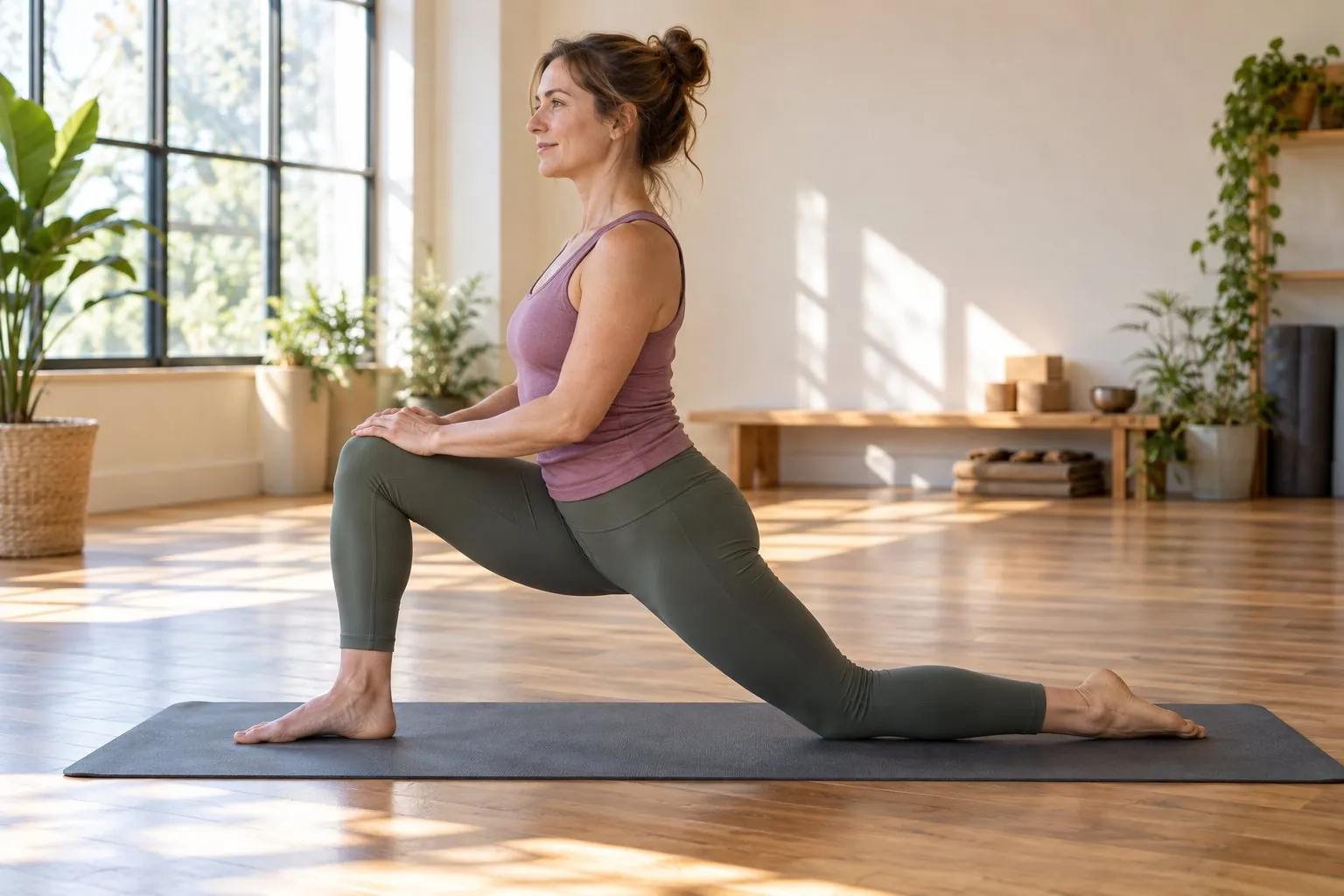
Gentle stretching is often part of the plan. Two stretches commonly used for snapping hip are a standing stretch for the outside of the hip, done by crossing the sore leg behind the other and leaning the hip toward a wall, and a lying stretch for the buttock, done by crossing one ankle over the opposite knee and pulling the thigh toward you. OrthoInfo describes holding each stretch for 30 seconds and repeating 2 to 3 sets of 4 on each side. Stop any stretch that causes sharp pain, and see a doctor if home care has not helped after a few weeks.
How is a painful popping hip diagnosed and treated?
Diagnosis starts with your story and an exam, where you move the hip to recreate the pop while the doctor feels for the tendon. X-rays are usually normal with tendon snapping, but they help rule out bone and joint problems. An MRI or ultrasound may be added when a labral tear or tendon problem is suspected.
Most people improve without surgery. Treatment usually includes a short break from the activity that triggers it, ice, over-the-counter anti-inflammatory medicine if it is safe for you, and physical therapy to stretch tight tissues and strengthen the hip. An injection may help when a bursa is inflamed.
Surgery is rarely needed for snapping hip. When a torn labrum or loose fragment keeps causing pain and catching after a few months of good care, hip arthroscopy can repair or remove the damaged tissue through small incisions.
Should I get my popping hip checked?
If your hip pops but feels fine and moves well, there is usually no need to worry or stop the activities you enjoy. If the popping hurts, is getting worse or comes with catching or instability, an exam can sort out whether it is a tendon outside the joint or a problem inside it.
Our Saturday Hip Pain Clinic is set up for exactly this kind of question, and you are welcome to bring any X-rays or MRI you already have. Booking a visit now can save months of wondering.
Questions patients ask
Why does my hip pop when I walk or stand up?
Most often a tight tendon or the IT band is sliding over a bony bump as the hip bends and straightens. This is common and usually harmless. If it hurts or is getting worse, have it examined.
Should I stop yoga or dance if my hip pops?
Not necessarily. If the pop does not hurt and your hip moves well, many people keep going with sensible warm-ups and stretching. If a pose causes pain or catching, ease off that movement and get an exam.
Can a popping hip turn into arthritis?
Tendon snapping outside the joint is not known to cause arthritis. Problems inside the joint, such as impingement and labral tears, can wear on the cartilage over time. That is one reason painful popping deserves a proper diagnosis.
SourcesReferences5
Medically reviewed by Dr. Stride, MD. How we write and review content. This guide is educational and does not replace an exam.
- Snapping Hip (opens in a new tab) AAOS OrthoInfo
- Snapping Hip Syndrome: What It Is, Symptoms & Treatment (opens in a new tab) Cleveland Clinic
- Hip Labral Tear: Symptoms & Treatment (opens in a new tab) Cleveland Clinic
- Hip Arthroscopy (opens in a new tab) AAOS OrthoInfo
- Femoroacetabular Impingement (opens in a new tab) AAOS OrthoInfo